Education:
- University of California at San Diego; graduated with Distinction
Beyond the Bio. What Makes Louis, Louis.
What is my Superpower?
Before people care about how much we know, they need to know how much we care.I think my superpower in this financial industry is my ability to lead with empathy and compassion—to truly understand the fear people feel when deciding whom to trust with their hard-earned money. I work from the belief that before people care about how much we know, they need to know how much we care.
Nothing matters more than asking open-ended questions about what’s important to them—the dynamics within their families, their children, and even the difficult topics—approached in a way that shows genuine care.
Too much emphasis is placed on how much money someone has, rather than how they want their legacy to live on through the people they love. Throughout my career, I’ve treated every relationship as if they were part of my own family. That starts with caring deeply, being present during their most challenging moments, and standing alongside them when they need support most.
At this stage, many of the families I work with don’t have anyone else—but us. It’s not unusual for me to end a phone conversation by telling them that I love them. That can catch people off guard at first, but it’s sincere. I truly feel that way, and I believe it’s important they know they’re not alone on this journey.
What is something interesting about you?What defines us isn’t how much we make, but how we show up for others.There are a few things people may not know about me that I think are interesting. Two of them relate to work I’ve done with programs that support children.
When I entered the business in 1980, everything revolved around money—how much you made, who the big producers were, and how to become one. It dawned on me early that many people who had “made it” were driven by ego, defining their worth by how much money they earned. I made a conscious decision not to get caught up in net worth at the expense of self-worth.
That realization led me to the Big Brothers Big Sisters program. After going through the full evaluation process, I was matched with a little brother in 1980. He was 10 years old at the time, and I was 23. Fast forward 45 years—he’s now 55, and he’s still my little brother.
We remain in touch, and below is a text I received from him recently:
“I remember so many awesome things growing up with you! One of, if not the best thing my mom ever did for me—getting us together! 6'4" in a three-piece suit driving a red Pinto, 1979. Starts ripping dunks on my 9' hoop.
I remember everything with you, bro. I’ll come visit next year—we can reminisce. Enjoy your night, bro! Love you!”
Another organization I became involved with was Touchstone, which worked with families of terminally ill children. Through that program, I de
veloped close friendships with two boys—John, who was about 13, and Jimmy, who was around 10. Both were facing terminal illnesses.One evening, I received a call asking me to go to Stanford Hospital. Jimmy was on his final breaths, and his mother had requested that I come. I had never met her and had never been on a pediatric ICU floor before, so I was understandably nervous. When I entered the room, I could see his blood pressure dropping rapidly on the monitor beside his bed. I began talking to him, and to my surprise, even though he was in a coma, his blood pressure started to rise and his strength returned. Knowing Jimmy was a big football fan, I called a few friends of mine—players on the San Francisco 49ers—right from his hospital room. I told Jimmy who I was calling and held the phone to his ear as each player spoke to him, encouraging him to keep fighting.
His blood pressure and heart rate returned to normal, and he moved out of the danger zone. Over the next few days, the players stayed in touch with him. Jimmy was eventually able to leave the hospital and return home, where he passed peacefully a few months later.
What that experience taught me—in real time—was the profound impact we have as human beings. Sometimes above all the medication a hospital can offer, empathy, care, compassion, and the way we communicate can literally change lives.
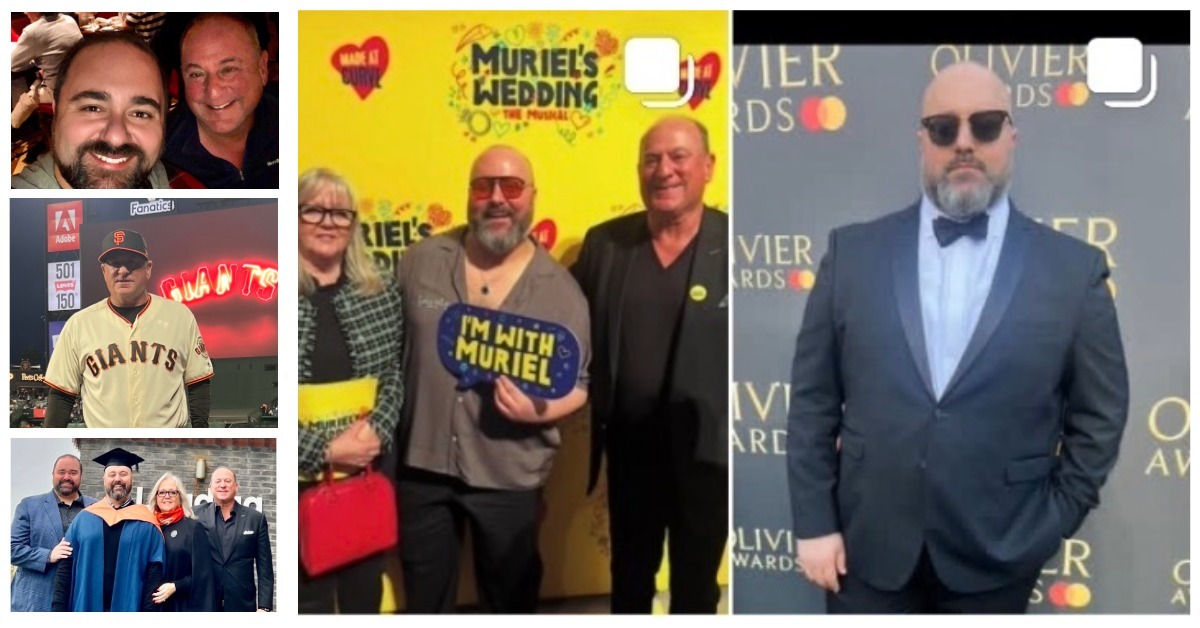
On a lighter note, one interesting fact about me is that this is my eighth season as a Ball Dude for the San Francisco Giants. About six or seven games a year, I put on a uniform and spend the entire game on the field—either along the first- or third-base line—catching foul balls and giving them to kids.
And finally, one more fun fact I once appeared on Family Feud. We won—and were invited back for a second show during the Richard Dawson era.