Investments designed for your life, your goals, your future
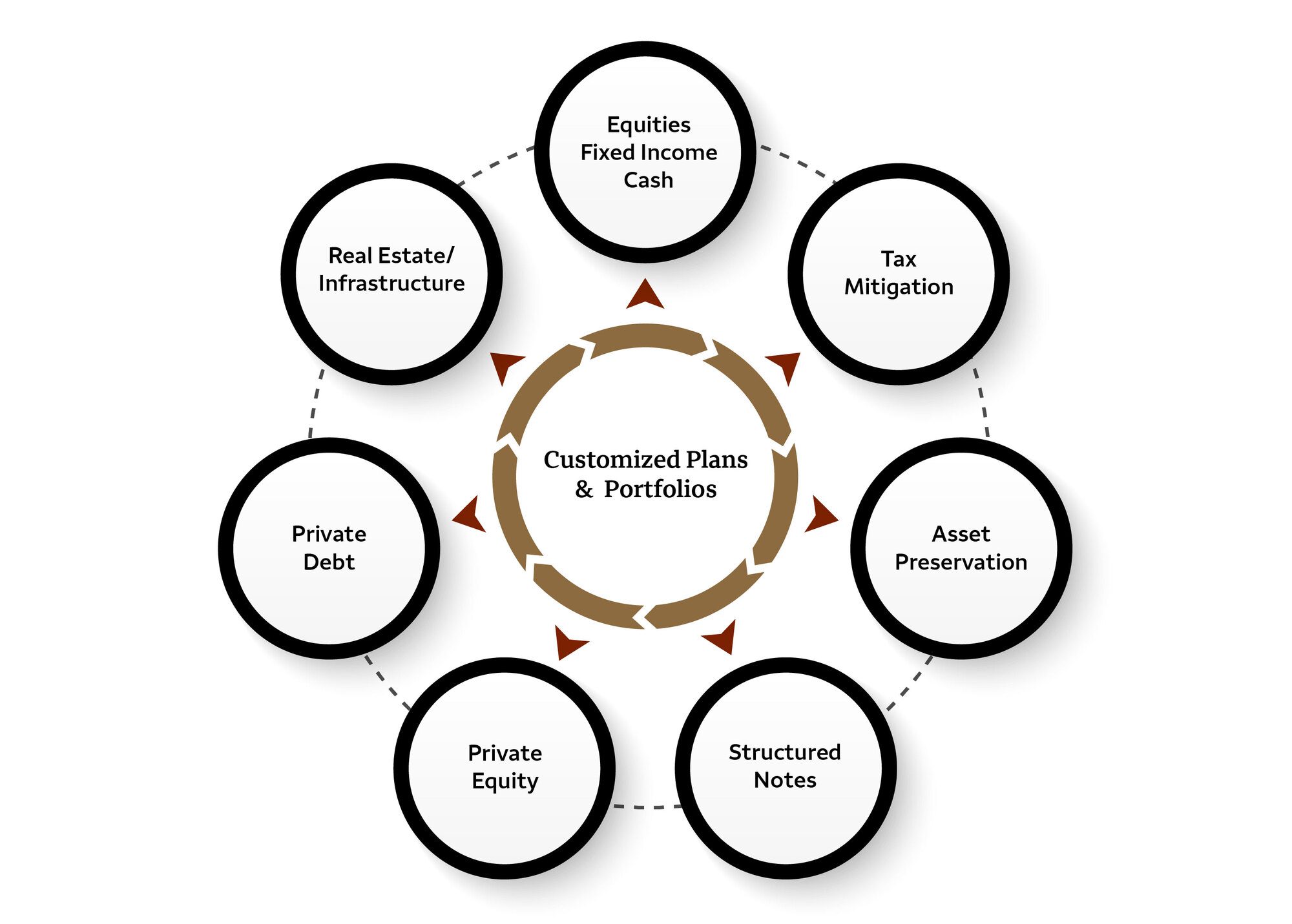
Personalized Plans…because no two lives are the same
Your plan should be as unique as you are. That’s why we take the time to understand your full picture and build a strategy that supports your goals—both now and in the future. Using forward-looking tools like long-term care analysis and scenario planning, we tailor each plan to fit your life, not someone else’s.
Customized Portfolios…because your wealth deserves more than a one-size-fits-all approach
It all starts with knowing you and your family. From there, we create investment strategies that are both thoughtful and flexible—built around your specific needs and priorities. Whether it's cash flow planning, preparing for major life events, managing health-related costs, tax strategies, philanthropy, or planning across generations, we take a holistic view to make sure your portfolio works hard for what matters most.“Nobody cares how much you know, until they know how much you care.” –Theodore Roosevelt
Wells Fargo Advisors is not a legal or tax advisor.
Asset allocation and diversification are investment methods used to help manage risk. They do not guarantee investment returns or eliminate risk of loss including in a declining market.
Alternative investments, such as hedge funds, funds of hedge funds, managed futures, private capital, real assets and real estate funds, are not appropriate for all investors. They are speculative, highly illiquid, and are designed for long-term investment, and not as trading vehicle. These funds carry specific investor qualifications which can include high income and net-worth requirements as well as relatively high investment minimums. The high expenses associated with alternative investments must be offset by trading profits and other income which may not be realized. Unlike mutual funds, alternative investments are not subject to some of the regulations designed to protect investors and are not required to provide the same level of disclosure as would be received from a mutual fund. They trade in diverse complex strategies that are affected in different ways and at different times by changing market conditions. Strategies may, at times, be out of market favor for considerable periods with adverse consequences for the fund and the investor. An investment in these funds involve the risks inherent in an investment in securities and can include losses associated with speculative investment practices, including hedging and leveraging through derivatives, such as futures, options, swaps, short selling, investments in non-U.S. securities, “junk” bonds and illiquid investments. The use of leverage in a portfolio varies by strategy. Leverage can significantly increase return potential but create greater risk of loss. At times, a fund may be unable to sell certain of its illiquid investments without a substantial drop in price, if at all. Other risks can include those associated with potential lack of diversification, restrictions on transferring interests, no available secondary market, complex tax structures, delays in tax reporting, valuation of securities and pricing. An investment in a fund of funds carries additional risks including asset-based fees and expenses at the fund level and indirect fees, expenses and asset-based compensation of investment funds in which these funds invest. An investor should review the private placement memorandum, subscription agreement and other related offering materials for complete information regarding terms, including all applicable fees, as well as the specific risks associated with a fund before investing.
Asset allocation and diversification are investment methods used to help manage risk. They do not guarantee investment returns or eliminate risk of loss including in a declining market.
Alternative investments, such as hedge funds, funds of hedge funds, managed futures, private capital, real assets and real estate funds, are not appropriate for all investors. They are speculative, highly illiquid, and are designed for long-term investment, and not as trading vehicle. These funds carry specific investor qualifications which can include high income and net-worth requirements as well as relatively high investment minimums. The high expenses associated with alternative investments must be offset by trading profits and other income which may not be realized. Unlike mutual funds, alternative investments are not subject to some of the regulations designed to protect investors and are not required to provide the same level of disclosure as would be received from a mutual fund. They trade in diverse complex strategies that are affected in different ways and at different times by changing market conditions. Strategies may, at times, be out of market favor for considerable periods with adverse consequences for the fund and the investor. An investment in these funds involve the risks inherent in an investment in securities and can include losses associated with speculative investment practices, including hedging and leveraging through derivatives, such as futures, options, swaps, short selling, investments in non-U.S. securities, “junk” bonds and illiquid investments. The use of leverage in a portfolio varies by strategy. Leverage can significantly increase return potential but create greater risk of loss. At times, a fund may be unable to sell certain of its illiquid investments without a substantial drop in price, if at all. Other risks can include those associated with potential lack of diversification, restrictions on transferring interests, no available secondary market, complex tax structures, delays in tax reporting, valuation of securities and pricing. An investment in a fund of funds carries additional risks including asset-based fees and expenses at the fund level and indirect fees, expenses and asset-based compensation of investment funds in which these funds invest. An investor should review the private placement memorandum, subscription agreement and other related offering materials for complete information regarding terms, including all applicable fees, as well as the specific risks associated with a fund before investing.
Contact Us
Is your plan on track?
Schedule a meeting today.
Thank you for your submission!